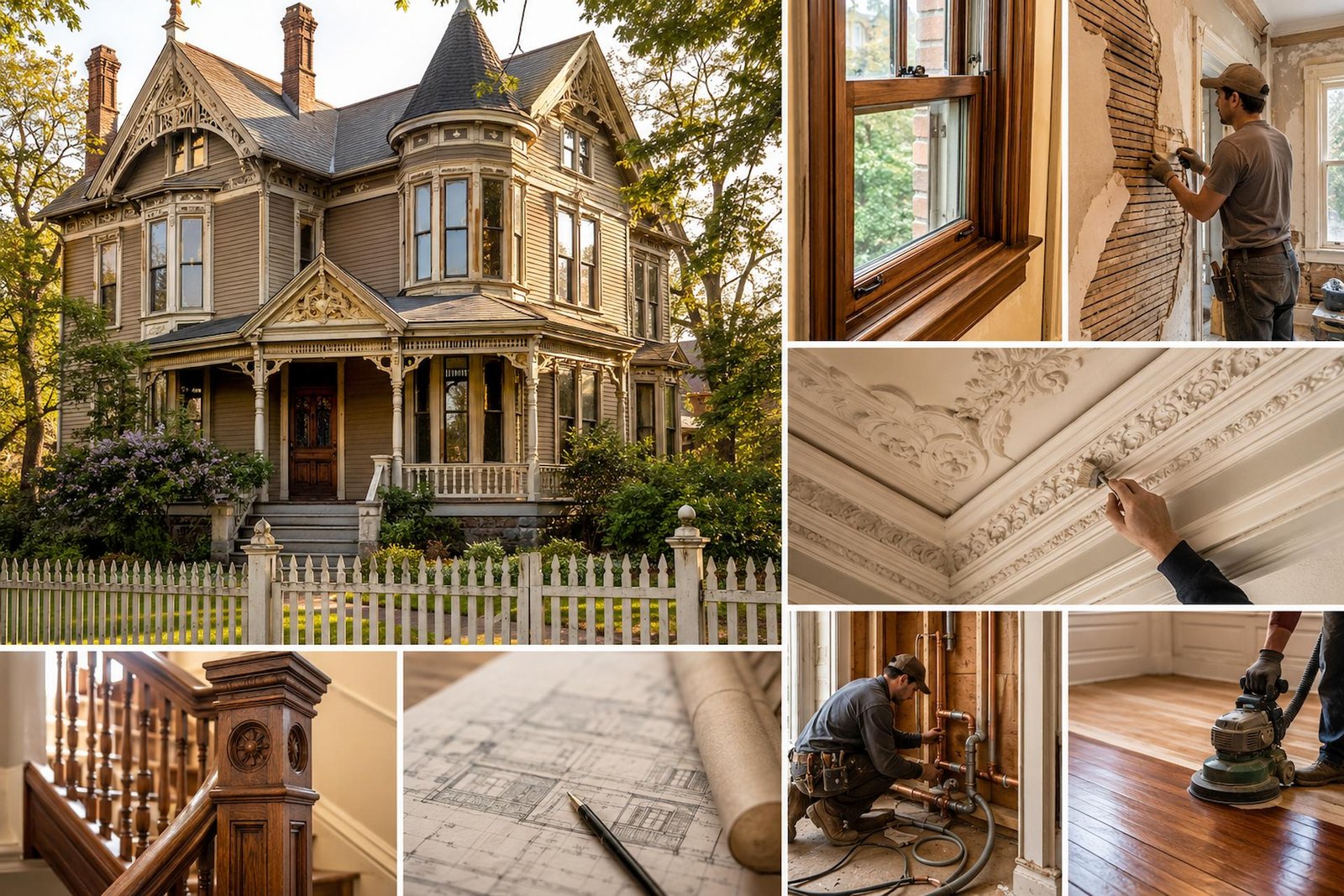
There is something undeniably special about walking into a historic home. Original hardwood floors, handcrafted trim, decorative plasterwork, and century-old architectural details create a level of character that modern houses rarely replicate. Yet behind that charm often lies a complicated reality. Aging plumbing, outdated wiring, drafty windows, structural wear, and strict preservation guidelines can quickly turn excitement into uncertainty for homeowners.
Historic house restoration is not simply about making an old property look attractive again. It is about protecting craftsmanship, preserving architectural history, and carefully adapting a home so it remains functional for modern living. When done thoughtfully, restoration allows homeowners to enjoy modern comfort without erasing the story the house was built to tell.
Understanding the Difference Between Restoration and Renovation
One of the most important concepts in historic home ownership is understanding the difference between restoration and renovation. While the terms are often used interchangeably, they mean very different things.
Renovation usually focuses on updating or changing a property to fit current design trends or personal preferences. Restoration, on the other hand, prioritizes preserving original materials, architectural details, and historical integrity whenever possible.
For example, replacing original wood windows with modern vinyl models may seem convenient, but it can significantly reduce the home’s historical authenticity and long-term value. Restoring those original windows often preserves both the character and craftsmanship that make the property unique.
This distinction matters because many historic homes are valued specifically for their authenticity. Once original details are removed, they are often impossible to recreate fully.
Why Historic Homes Require a Different Approach
Older homes were built using materials and construction techniques that differ greatly from modern standards. Many properties built before the mid-20th century contain plaster walls, solid wood framing, lime mortar, handmade bricks, and intricate millwork that require specialized care.
Modern construction shortcuts rarely work well in historic structures. In some cases, they can even create long-term damage. For example, sealing an old house too tightly with modern insulation can trap moisture in the walls, leading to mould growth and wood rot.
Historic homes also tend to age differently. Floors may slope slightly, walls may settle unevenly, and materials may expand or contract over decades of seasonal changes. Experienced restoration professionals understand how to work with these natural conditions rather than trying to force old homes to behave like newly built properties.
Preserving Historic Windows and Woodwork
Historic windows are among the most misunderstood features in older homes. Many people believe replacing them automatically improves efficiency, but well-restored original windows can perform surprisingly well when combined with weatherstripping and storm windows.
Older wood windows were often made from dense old-growth timber that is far more durable than many modern materials. Proper restoration can extend their lifespan for decades while preserving the property’s historic character.
The same principle applies to original wood floors, trim, doors, staircases, and moldings. These elements were frequently handcrafted using materials and techniques rarely found today. Refinishing and repairing original woodwork almost always adds more value and authenticity than replacing it entirely.
Navigating Historic Preservation Rules
Many historic homes fall within preservation districts or carry protected status through local, state, or national organizations. These designations often come with rules regarding exterior changes, additions, demolition, and approved materials.
While regulations may initially feel restrictive, they exist to preserve architectural heritage and maintain neighborhood character. Homeowners should research preservation guidelines carefully before beginning major work.
Working closely with local preservation boards or historical commissions early in the process can prevent expensive mistakes and project delays. In many cases, officials are willing to help homeowners find solutions that balance preservation with practicality.
Understanding these requirements before purchasing a historic property is equally important. Restoration projects often take more time, planning, and specialized expertise than standard home renovations.
Finding the Right Restoration Professionals
Historic restoration is highly specialized work. A contractor experienced in new construction may not know how to properly handle delicate plaster repair, antique windows, or historical masonry.
Hiring professionals with proven restoration experience is one of the most important investments homeowners can make. Skilled specialists understand period-appropriate materials, preservation methods, and the structural behavior of older homes.
Before hiring anyone, homeowners should review previous restoration projects, ask detailed questions about techniques, and verify that the contractor is familiar with local preservation standards. Poor workmanship can permanently damage historic features and reduce the property’s value.
Patience also matters. Quality restoration work often takes longer because it prioritizes careful craftsmanship rather than speed.
Balancing Modern Comfort with Historical Integrity
Successful historic restoration is ultimately about balance. Homeowners want functional kitchens, updated bathrooms, reliable heating, and comfortable living spaces. At the same time, the property’s historical identity deserves protection.
The best restoration projects respect both priorities. They preserve the craftsmanship, texture, and personality that make historic homes meaningful while quietly integrating modern systems that improve everyday life.
Thoughtful restoration does not freeze a house in the past. Instead, it allows the property to continue evolving responsibly while honoring the generations of history already built into its walls.
Conclusion
Historic house restoration is far more than a design project. It is a long-term commitment to preserving architectural heritage while adapting a home for modern living. The process requires patience, research, specialized expertise, and a genuine respect for original craftsmanship.
When approached carefully, restoration protects the character that makes historic homes irreplaceable while improving comfort, safety, and functionality for future generations. Every restored window, repaired plaster wall, and preserved wood floor helps keep an important piece of history alive.
For homeowners willing to embrace the challenge, restoring a historic home becomes more than renovation. It becomes stewardship — the responsibility of carrying a story forward while ensuring it remains livable for years to come.