Indoor air quality affects far more than comfort. The air inside a home can influence sleep quality, allergy symptoms, respiratory health, energy levels, and even long-term wellbeing. Many modern homes are tightly sealed for energy efficiency, but that often traps pollutants indoors. Dust, pet dander, cooking fumes, mould spores, volatile organic compounds (VOCs), and poor ventilation can quietly reduce air quality every day.
The good news is that meaningful improvements do not always require major renovations or expensive systems. Small, consistent changes can dramatically reduce indoor pollutants and create fresher, healthier living spaces. Here are the most effective ways homeowners can improve indoor air quality naturally and efficiently.
1. Improve Ventilation Throughout the Home
One of the fastest ways to reduce indoor pollutants is by improving airflow. Stale indoor air allows contaminants to build up over time, especially in kitchens, bathrooms, and tightly sealed rooms.
Opening windows for even 10–15 minutes daily helps exchange trapped indoor air with fresher outdoor air. Exhaust fans in kitchens and bathrooms also play a major role by removing moisture, cooking fumes, and airborne particles before they spread through the house.
Cross-ventilation works particularly well. Opening windows on opposite sides of the home encourages steady airflow and prevents stagnant air pockets. Homes in humid climates may benefit from controlled ventilation systems that improve air exchange without introducing excess moisture.
Better ventilation supports healthier breathing conditions while reducing odors, humidity, and airborne contaminants.
2. Use High-Quality HEPA Air Purifiers
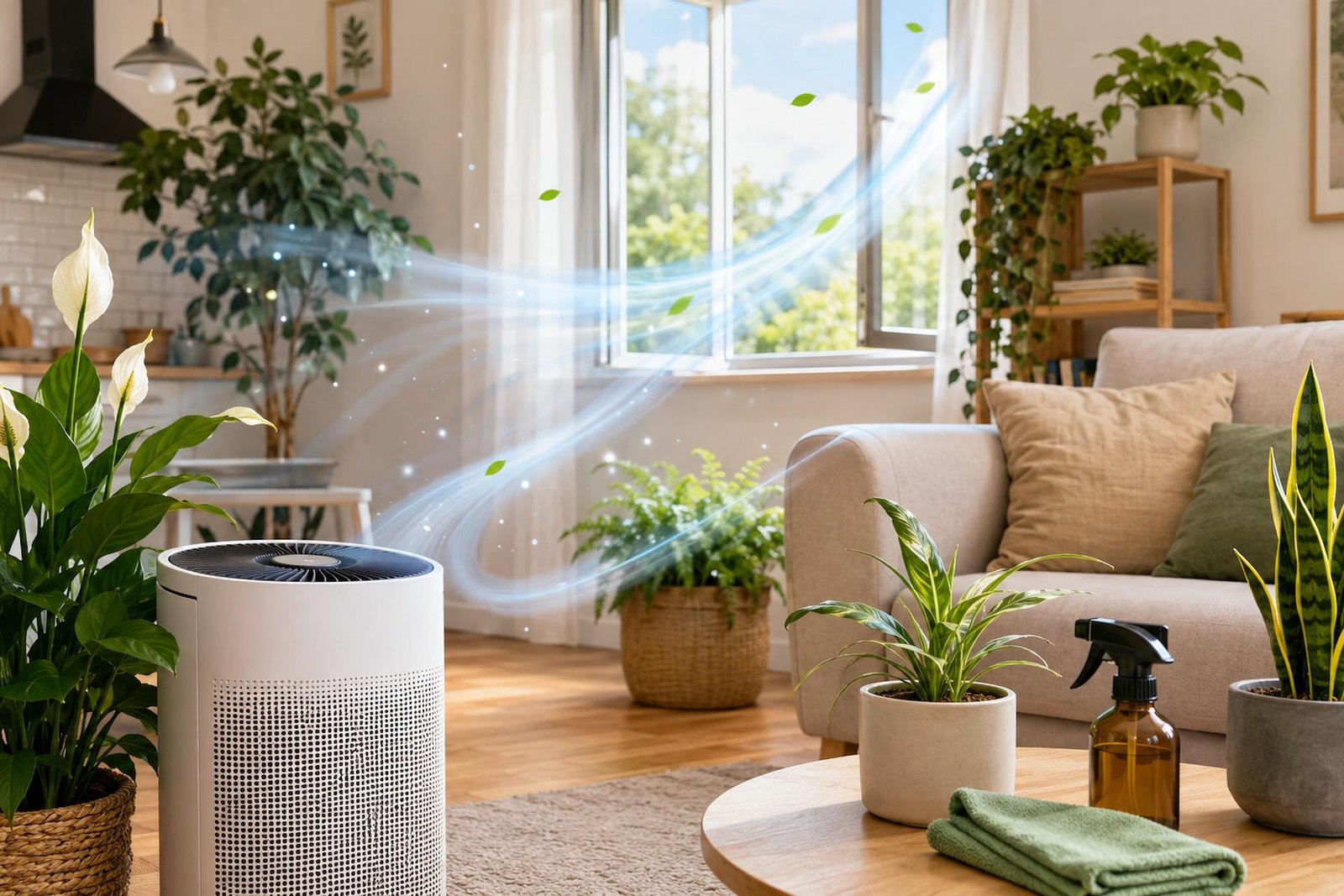
Air purifiers can significantly improve indoor air quality when chosen correctly. The most effective units use true HEPA filters, which capture extremely small airborne particles such as dust, pollen, mould spores, and pet dander.
Different purifier technologies target different pollutants:
- HEPA filters remove fine particles and allergens
- Activated carbon filters reduce smoke, cooking odors, and chemical fumes
- UV systems may help neutralize bacteria and certain airborne microorganisms
For most homes, a combination HEPA and activated carbon system provides the best overall improvement. Bedrooms and living rooms are usually the most important locations for purifier placement because people spend the most time there.
Proper sizing also matters. A purifier designed for small rooms will struggle in larger open spaces, significantly reducing its effectiveness.
3. Control Indoor Humidity Levels
Humidity directly affects mould growth, dust mites, and overall indoor comfort. Excess moisture creates ideal conditions for mould and mildew, while overly dry air may irritate skin, eyes, and respiratory passages.
Most experts recommend keeping indoor humidity between 30% and 50%. A simple hygrometer can help monitor moisture levels throughout the home.
To manage humidity effectively:
- Use dehumidifiers in damp areas
- Repair plumbing leaks quickly
- Run bathroom exhaust fans after showers
- Ensure proper drainage around the property
- Avoid drying clothes indoors excessively
Balanced humidity makes indoor air feel cleaner and more comfortable while reducing common allergens that thrive in damp environments.
4. Replace HVAC Air Filters Regularly
Dirty HVAC filters are one of the most overlooked causes of poor indoor air quality. When filters become clogged, airflow becomes restricted, and dust begins circulating throughout the home.
Replacing filters every one to three months helps maintain cleaner airflow while reducing strain on heating and cooling systems. Homes with pets, smokers, or allergy sufferers often require more frequent replacements.
Higher-efficiency filters can capture smaller particles, including pollen, dust mites, and fine debris. However, homeowners should ensure the HVAC system is compatible with denser filters before upgrading.
Regular filter replacement also improves system efficiency, helping reduce energy costs while supporting cleaner indoor air.
5. Reduce VOC Exposure Inside the Home
Volatile organic compounds, commonly called VOCs, are chemicals released from many household products. Paints, cleaning supplies, air fresheners, furniture, flooring materials, and personal care products can all release VOCs into the air.
Long-term exposure may contribute to headaches, respiratory irritation, dizziness, and other health concerns.
Reducing VOC exposure can involve simple changes such as:
- Choosing low-VOC paints and adhesives
- Using fragrance-free cleaning products
- Avoiding synthetic air fresheners
- Selecting natural or eco-friendly household products
- Allowing new furniture to air out before heavy use
Many homeowners notice immediate improvements in indoor air quality once heavily scented products are removed from their daily routines.
6. Keep Dust and Pet Dander Under Control
Dust carries a surprising number of indoor pollutants, including allergens, fibers, pollen, bacteria, and chemical residues. Pet dander adds another common trigger for respiratory irritation and allergies.
Consistent cleaning helps significantly reduce airborne particles. Effective strategies include:
- Vacuuming with HEPA-filter vacuums
- Washing bedding weekly in hot water
- Dusting with damp cloths instead of dry dusters
- Grooming pets regularly
- Cleaning curtains, rugs, and upholstered furniture
Hard flooring surfaces generally trap fewer allergens than carpets, making them easier to maintain in allergy-sensitive homes.
Reducing dust buildup improves overall cleanliness while helping HVAC systems operate more efficiently.
Wrapping Up
Improving indoor air quality does not require a complete home overhaul. Small, practical changes such as improving ventilation, controlling humidity, replacing HVAC filters, reducing VOC exposure, and maintaining cleaner living spaces can make a noticeable difference over time.
Cleaner indoor air supports healthier breathing, better comfort, improved sleep, and a fresher home environment overall. By focusing on the most common sources of pollution first, homeowners can create safer, healthier indoor spaces that benefit the entire household year-round.