Many homeowners schedule seasonal HVAC tune-ups simply because they have been told it is “important maintenance.” What often remains unclear is what actually happens during those visits — and whether the service truly delivers value.
The reality is that HVAC tune-ups vary enormously between companies. Some technicians perform detailed inspections, cleaning, testing, and performance evaluations that genuinely extend equipment life and improve efficiency. Others spend less than 20 minutes at the property, replace a filter, glance at the thermostat, and immediately begin discussing replacement systems. Understanding the difference matters. A legitimate seasonal tune-up can reduce the risk of breakdowns, improve energy efficiency, protect manufacturer warranties, and identify safety problems before they become dangerous. A poor-quality visit, however, offers little more than temporary reassurance.
1. A Professional HVAC Tune-Up Is Far More Than a Quick Inspection
A true HVAC tune-up is a preventive maintenance service designed to evaluate system performance, clean critical components, identify wear before it leads to failure, and ensure safe operation under real-world working conditions.
The best technicians follow a structured checklist rather than relying on guesswork or rushed visual inspections. A thorough tune-up usually takes between 60 and 120 minutes, depending on system type, accessibility, age, and condition.
Professional visits generally include:
- Electrical testing
- Airflow evaluation
- Cleaning of critical components
- Refrigerant or combustion testing
- Safety inspections
- Thermostat verification
- Drainage checks
- System performance measurements
A technician should also explain findings clearly, answer questions without pressure, and provide documentation of completed work.
If a “full tune-up” lasts only 15–20 minutes, homeowners are unlikely to receive comprehensive maintenance.
2. Cooling Season Tune-Ups Focus Heavily on Efficiency and Refrigeration Performance
Air conditioning systems lose efficiency gradually over time. Dirt buildup, electrical wear, airflow restrictions, and refrigerant issues can quietly increase energy usage while reducing comfort.
During a professional cooling-season tune-up, technicians should carefully evaluate both indoor and outdoor equipment.
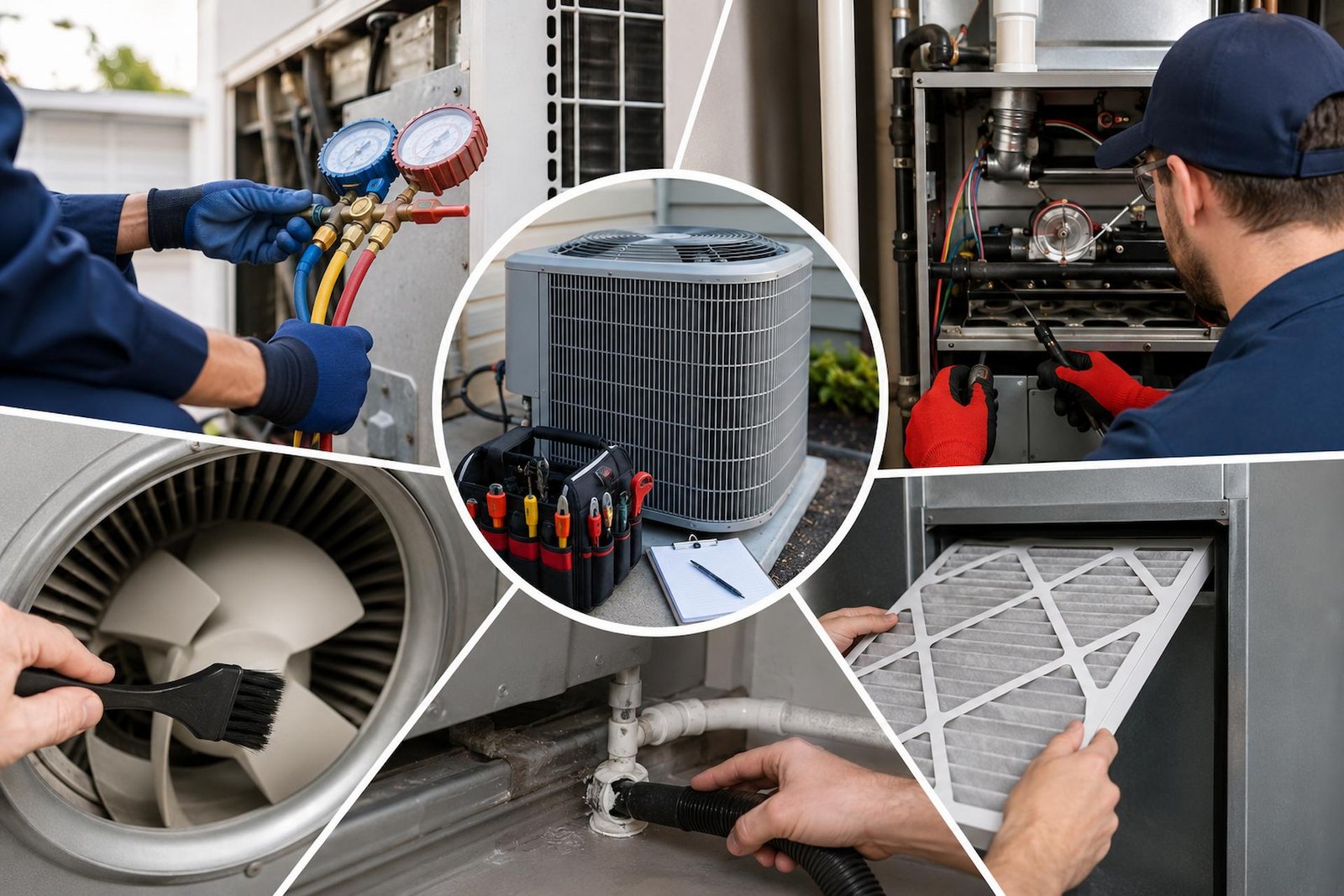
Key cooling-system services often include:
- Measuring refrigerant pressures
- Checking for refrigerant leaks
- Cleaning condenser coils
- Inspecting evaporator coils
- Testing capacitor strength
- Measuring compressor amperage
- Tightening electrical connections
- Evaluating blower motor performance
- Checking temperature differentials
- Clearing condensate drains
Each step serves a purpose. For example, dirty condenser coils force compressors to work harder, increasing electricity consumption and shortening system lifespan. Weak capacitors may still function temporarily while sitting near failure conditions that could lead to sudden summer breakdowns.
Professional testing helps identify these problems before they become expensive emergency repairs.
3. Refrigerant Testing Is One of the Most Important Parts of AC Maintenance
Refrigerant issues are commonly misunderstood by homeowners. Air conditioners do not “use up” refrigerant like fuel. If levels are low, there is usually a leak somewhere in the system.
A qualified technician should never simply “top off” refrigerant without checking system pressures and investigating potential leaks.
Professional refrigerant evaluation includes:
- Suction and discharge pressure readings
- Superheat and subcooling measurements
- Leak detection if pressures appear abnormal
- Temperature split analysis
- Verification against manufacturer specifications
Improper refrigerant levels can seriously damage compressors, reduce cooling performance, and increase operating costs. Even small refrigerant imbalances may reduce efficiency significantly over an entire cooling season.
Technicians who skip detailed pressure testing are missing one of the most valuable parts of the tune-up process.
4. Coil Cleaning Directly Impacts Efficiency and System Lifespan
HVAC coils transfer heat. When dirt accumulates on those surfaces, heat transfer becomes less effective, forcing the equipment to work harder.
Outdoor condenser coils frequently collect:
- Grass clippings
- Cottonwood debris
- Dust
- Pollen
- Pet hair
- Leaves
Indoor evaporator coils can accumulate dust, biological growth, and moisture-related contamination.
A professional tune-up should include coil inspection and cleaning when necessary. Even moderate buildup can reduce system efficiency while increasing compressor strain.
Homeowners are often surprised by how dramatically airflow and cooling performance improve after proper coil cleaning. In many cases, systems that seemed “weak” simply suffered from reduced heat transfer due to neglected maintenance.
5. Electrical Testing Helps Prevent Sudden System Failures
Many HVAC breakdowns originate from electrical component failures rather than major mechanical problems.
Capacitors, contactors, relays, and electrical connections gradually deteriorate from heat, vibration, and seasonal operation. Professional tune-ups help identify these issues before complete failure occurs.
Important electrical maintenance tasks include:
- Measuring capacitor microfarads
- Inspecting contactor wear
- Tightening electrical terminals
- Checking voltage readings
- Measuring motor amperage
- Looking for overheating signs
- Inspecting wiring insulation
Weak electrical components may continue operating temporarily while slowly damaging motors and compressors. Identifying those problems early can often prevent much larger repair bills later.
This is especially important for older HVAC systems approaching 10–15 years of service life.
6. Condensate Drain Cleaning Prevents Water Damage and Humidity Problems
Air conditioners remove moisture from indoor air. That moisture exits through the condensate drain system.
When drains become clogged, homeowners may experience:
- Water leaks
- Overflow shutoffs
- Mold growth
- Musty odours
- Increased indoor humidity
- Ceiling or drywall damage
Professional tune-ups should include drain inspection, clearing, and treatment when needed.
Technicians often flush the drain line and inspect the drain pan for standing water or biological growth. This step may appear minor, but clogged condensate systems are among the most common causes of preventable HVAC service calls during the summer months.
Ignoring drainage maintenance can lead to surprisingly expensive home repairs unrelated to the HVAC equipment itself.
7. Heating Season Tune-Ups Prioritize Safety as Much as Performance
Heating systems introduce additional safety concerns that cooling systems do not typically present.
Gas furnaces, in particular, require careful inspection to ensure safe combustion and ventilation.
A legitimate heating-season tune-up should include:
- Heat exchanger inspection
- Burner cleaning
- Ignition testing
- Flame sensor cleaning
- Gas pressure verification
- Flue draft testing
- Carbon monoxide evaluation
- Safety switch testing
- Combustion analysis
These steps help identify dangerous conditions such as incomplete combustion, cracked heat exchangers, or venting problems.
Poor combustion performance not only wastes energy but can also create serious carbon monoxide risks. This is one reason heating tune-ups should never be treated as optional for fuel-burning systems..
Conclusion
Seasonal HVAC tune-ups are not automatically worthwhile simply because they are commonly recommended. Their true value depends entirely on the quality, thoroughness, and technical expertise behind the service.
A legitimate professional tune-up involves detailed system testing, cleaning, performance evaluation, and safety inspection, all designed to improve efficiency, reduce the risk of breakdowns, and protect long-term equipment health. When performed correctly, preventive maintenance can help homeowners avoid costly repairs, improve comfort, and extend the lifespan of their HVAC systems.